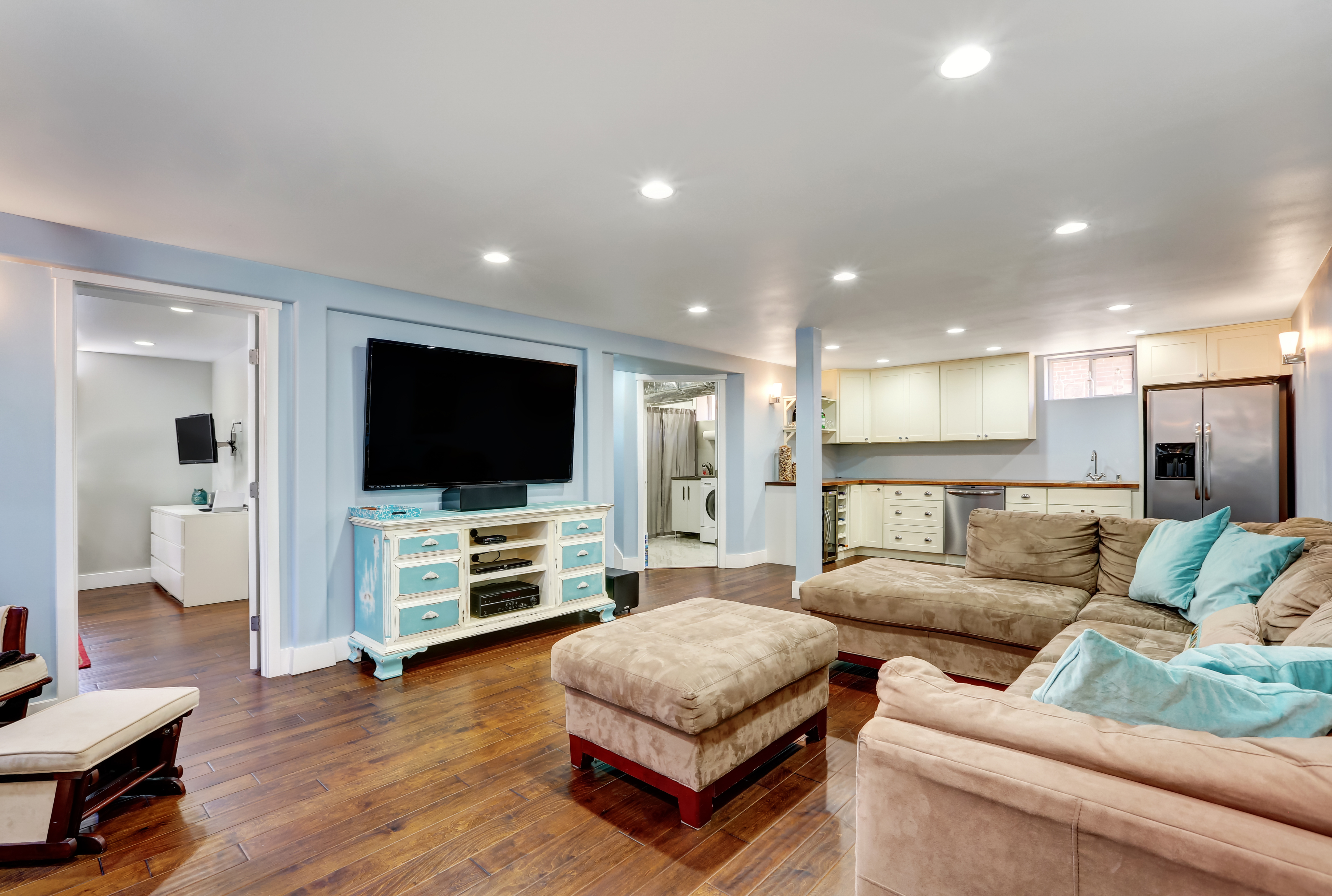
New property listed in Mount Pleasant, Calgary

CLICK HERE to view the HIGH-QUALITY version of this article.
FTHBI
There seems to be more criticizing than applause, so let's discuss some of the pros and cons so you can decide for yourself if the program is right for you.
WHY?
The Liberal government introduced the FTHBI program in September 2019' intending to make it easier for first-time homeowners to purchase a property and lower the monthly payments through a shared equity mortgage.
THE BASIC 411
CMHC'S EXAMPLE
Anita wants to buy a new home for $400,000.
Under the First-Time Home Buyer Incentive, Anita can apply to receive $40,000 in a shared equity mortgage (10% of the cost of a new home) from the Government of Canada.
The Incentive lowers the amount she needs to borrow and reduces her monthly expenses.
As a result, Anita’s mortgage is $228 less a month or $2,736 a year.
SOME CONSIDERATIONS
WHAT WOULD I DO
It seems like the new program could help some first-time buyers focusing on lower price point properties get into the market because it can lower monthly payments. However, the opportunity does not come without costly strings attached and unknowns that I am not comfortable with.
For me, the potential risks are higher than the possible gains.
The Incentive does not help buyers save for, contribute to the down payment or lower the bar to make it more feasible. And it also doesn’t help buyers in Canada’s most expensive cities like Toronto, Vancouver, etc either because property value far exceeds the limit. It's also interesting that they share the gains on resale when the homeowner invests all the time, money and effort. Yet, they don't take less if the property loses value on resale. Interesting...
WHAT TO DO NEXT
Do your research and educate yourself on all the details of the program then speak to different industry professionals for their feedback and insight on various aspects of the program.
Once you've gathered all the information, you can decide if the First-Time Home Buyer Incentive Program is right for you.
Get in touch with me if you have any questions.
CLICK HERE to view the HIGH-QUALITY version of this article.
This is one of the most common questions I receive, so let's talk about the pros and cons so you can decide for yourself.
OLD SCHOOL
Once upon a time, Open Houses were effective selling tools because it was one of the few ways buyers could see properties, so they increased the home's marketing exposure. However, technology has drastically changed how buyers shop for their new home now; in fact, statistics show that less than 4% of buyers attend.
THE NEW WAY TO SHOP
With the latest viewing tools, buyers have full exposure to property details, an endless number of still and panoramic photos, videos, 3D tours, conveniently available 24-7, and from anywhere and at their convenience.
Because there is so much information available now, one could consider online viewings to be the buyer's first showings. After researching the property, if buyers are interested in a walk-through, they will book a private showing with the listing Realtor or ask their own to organize one.
SAVING TIME & ENERGY
The tech-tools save everyone time and effort. Buyers can rule out properties that are obviously not suitable, and that saves sellers from preparing their homes and vacating for unmatched buyers.
DO YOU WANT BUYERS OR VISITORS?
Buyers actively shopping and ready to purchase will organize private showings so they can explore properties at their own pace and undisturbed by others. These are quality buyers that have spent some amount of time pre-qualifying the property to have some of their criteria. They have also chosen to commit their time and energy for a "second viewing", and this matches the seller's efforts of preparing and leaving for the showing.
In Open House, your doors are wide open to unknown visitors. There's no way to know if they can afford the property, if it's a suitable match or their intentions. Plus, there are potential security risks as you are allowing strangers into your home.
WHY A SELLER MAY CONSIDER HOSTING AN OPEN HOUSE?
AS SEEN ON TV, NOT.
If a seller sees benefit in opening their doors to everyone (including curious neighbours, dreamers, people out for a walk, or driving by), then having their Realtor host an Open House may give them peace of mind. However, they must also understand Open Houses don't actually work as they do on HGTV shows where the seller has an offer by the end of the day. In fact, some stats show the odds of receiving an offer because of an Open House is less than 1%, excluding super-red-hot market conditions.
SUPER-RED-HOT MARKETS
In a super-red-hot seller's markets, (THINK - the heydays for Vancouver, Toronto), Open Houses can be effective tools. They provide access to all potential buyers at one time, which can boost the sense of urgency or FOMO to work in the seller's favour.
FROM THE REALTOR'S ® PERSPECTIVE
Some Realtors® volunteer to host an open house because during them they get exposure to new prospective purchasing clients and introduce themselves curious neighbours that may sell in the future. Open Houses are also opportunities to market themselves and boosting their brand recognition.
There are some Realtors® that believe Open Houses help the sale; however, the majority do not. Some stats show as many 63% of Realtors® do not recommend them to their clients.
WHAT DID I DO?
When I sell my properties, my philosophy for buyers is "quality over quantity," and I do not host Open Houses. I choose to focus on private showings for qualified buyers that have pre-determined that my property is a good match for them or at least has the potential to be.
SPENDING BIG BUCKS ON SECURITY
I spend thousands of dollars are year on security systems to keep strangers out, so I'm not going to throw all that away to let unqualified randoms wander through to scope out my property.
WHAT ABOUT AGENT TOURS?
I also do not host Agent Tours (an open house for only other realtors) because if Realtors® have qualified clients, the property will come up in their custom searches, and they will request a private tour if it's a suitable match.
THE KEYS TO A SUCCESSFUL SALE
THERE'S NO RIGHT OR WRONG ANSWER.
Open Houses are not on my "to-do list," but they could be on yours.
WHAT IS THE PURPOSE OF THE OPEN HOUSE?
If it's to provide access to all with hopes of improving marketing exposure, then hosting on Open House is likely the right answer for you.
If you're hoping for an offer at the end of it it, you have very long odds.
Get in touch with any questions or feedback.
CLICK HERE to view the HIGH-QUALITY version of this article.
HOW THEY COULD AFFECT YOU
Changes have been made to Alberta's condominium legislation, and it seems more are on the way. As for the recent revisions enforced as of January 1, 2020, CCI (Canadian Condominium Institute) worked directly with the Government of Alberta. The goal for the new legislation was too...
“significantly improve the lives of condominium owners, boards, and industry members. These changes will help simplify condominium governance for volunteer boards, especially regarding voting procedures, conducting AGMs efficiently, and clarifying the insurance claims process.”
SOME KEY AMENDMENTS
IMPORTANT FACT - The Regulations do not require all unit owners to have personal insurance to include the $50,000 deductible coverage.
Transparency - The Board must be more transparent to unit owners and provide Minutes, Budgets, and Reserve Fund Studies at no charge, which will save sellers hundreds of dollars when providing condo documents to prospective buyers. And there are restrictions on how much condo corporations and management companies can charge for others.
Age Restrictions - Bylaws on new buildings are no longer allowed to apply age restrictions unless it is a 55+ only building. Buildings currently with age restrictions have a 15-year deadline before this Bylaw will be removed.
Adjustments have been made to regulations covering everything from the disclosure of information to how annual general meetings are organized, sanctions, fees for documents, and the qualifications for those who conduct reserve fund studies.
Removing the requirement to provide the minutes of all board meetings in the package for annual general meetings (AGMs).
Changing the requirement to disclose draft AGM minutes from 30 days to 60 days after the AGM.
Regulations stipulate the fees condo corporations and management companies are allowed to charge for copies of requested paper documents.
Change to the maximum fee for an estoppel certificate from $100 to $200, or $300 if rushed, and add a disclosure statement document fee of $100, or $150 if rushed. Changing the per-document cost for paper documents from a $10 flat fee to $0.25 per page, or $10, whichever is more.
Eliminating tiered rates for deposits condominium owners provide to their corporation when renting out the unit they own and setting the maximum for these deposits at $1,000 or one month’s rent, whichever is higher.
Allowing condominium corporations to borrow up to 15 % of their annual revenue as the default limit but also allow that limit to be changed through their bylaws.
Broadening the list of those who can conduct reserve fund studies.
Overall, I see the changes to be more good than bad. As a former condo owner, I like that some of the condo documents will be provided free of charge, and there is a cap on the ones I have to purchase.
I am also a fan of the changes to the chargeback rules, so I am not penalized for others' negligence. Yes, my personal insurance costs will go up but that is life plus I get peace of mind that if I am responsible, then I have coverage.
I also see a benefit of removing the 60-day notice on AGMs to be proactive on issues that need immediate attention and collaboration.
Call my insurance broker to confirm the coverage I currently have and add the $50,000 deductible coverage. I'd also contact my condo Board to see if they have a record of which owners have the "absolute liability" insurance coverage. There's nothing I can do about the answer, but the answer may help me prepare for different scenarios.
Water Damage - Roy Rasmusen of Expert Condo Review recommends each owner needs to be diligent and inform their insurance provider the amount of the water deductible for the condo corporation policy because this is the maximum amount that can be assessed to the owner.
Age Restrictions - Unit Owner
If I owned a unit in a building that currently has an age restriction (other than a 55+ plus) then I need to understand that when the removal of this age restriction comes into effect that my quality of life could potentially go down, depending on the demographics in the building. Granted, a 15-year deadline is still a generous amount of time; it could still affect my resale because there is a variable of when it will be lifted.
Age Restrictions - Purchaser
If I was buying a condo, this new regulation will only affect me is if I am specifically looking for an adult-only building and I am under 55 years old now or will be in 15 years because this lifestyle has a limited shelf-life. I may seriously consider purchasing a duplex without a condo corporation or detached property as these new rules do not apply, and I won’t have to move when the age restriction Bylaw is lifted or potentially lower my quality of life.
CLICK HERE to view the HIGH-QUALITY version of this article.
Dr. Aaron Goodarzi is an expert in radon and recently spoke at the Calgary Real Estate Board. He explained that it is an invisible and odourless radioactive gas with the potential to cause lung cancer and other serious health problems.
Yes, that statement got my attention too.
CLICK HERE for Dr. Aaron Goodarzi’s TED Talk, and below are other useful resources.
Check out the links for more information.
Canadian Real Estate Association (CREA)
TESTING FOR RADON
According to Dr. Aaron Goodarzi, Health Canada and the real estate industry's governing bodies, the best practice is to test for a minimum of 90 days. They do not believe short-term tests taken during home inspections or over a few days collect sufficient data for accurate and reliable results. Health Canada suggests testing between October - April with an acceptable level of 200 becquerels per cubic meters (200 Bq/m3).
YOUR HOME HAS HIGH LEVELS OF RADON, NOW WHAT?
The solution is relatively simple and inexpensive.
A radon mitigation device is installed to vent the gas from the basement to the outside. How much? Well, that depends on the scope of the work, and I've heard quotes from $500 - $3,000.
CLICK HERE to find a Canadian - National Radon Proficiency Program C-NRPP) technician in your area.
DOES RADON AFFECT MY REAL ESTATE TRANSACTION?
It could.
SELLING A PROPERTY
If the seller has not completed or is in the process of testing, the results are not available for the initial transaction, so there are no guaranteed outcomes during the offer and negotiation phase.
As of this writing, radon testing is not mandatory for sellers; however, that doesn’t mean the topic is over for them. Why?
Some prospective buyers may ask if tests have been completed, and become hesitant if confirmed long-term results are not available.
If test results are not available, some buyers may request a holdback until radon levels are confirmed. If the results are high (i.e., greater than 200 Becquerels), they may ask the seller to incur the costs of mitigation or that the holdback funds will be used radon mitigation. And, if the results are low (i.e., less than 200 Becquerels), the funds will be released to the seller.
The Real Estate Council of Alberta's (RECA) guidelines state that "if the radon test showed high levels of radon (higher than 200 Becquerel), that's considered a material latent defect that MUST be disclosed to prospective buyers unless a radon mitigation device is installed prior to listing."
Some buyers may take on the long-term testing and potential mitigation themselves, so they have peace of mind.
If I was selling a property, the questions I'd be asking myself is...
a) Would I rather get ahead of a potential problem by start long-term testing now, undergo mitigation (if necessary), and potentially before a sale.
The con - spending money upfront without knowing if the radon issue will arise.
The pro - have more control over the testing, mitigation process, and share the low test results with potential buyers as a selling feature. Also, I benefit from living in a low radon environment.
b) Or wait and see if radon is an issue for buyers, then work with a holdback, potentially take responsibility for mitigation before closing, accept there could be delays throughout the process, work with the buyer on solutions, etc.
BUYING A PROPERTY
Buyers can ask the seller if they have completed a 90-day radon test and request to see the results.
According to RECA, if the levels are greater than 200 Becquerels, sellers must disclose it as a material latent defect.
What are your options?
During the seminar, Dr. Aaron Goodarzi suggested that extensive renovations (especially in the basement) could alter radon levels, so pre-renovation testing is not as important and recommends post-renovation testing.
WHAT DID I DO?
As you know, you can find articles and research online to support any belief, so it's challenging to know "the truth." But because of the potential risks, I ordered the Evict Radon ($54.59 plus return shipping) and took the first step in doing my own research and conclusion.
I started testing once it was delivered, effortless to set up, and I'll send it back after 90 days. If the results come back above 200 Bq/m3, then I'll hire a C-NRPP technician for mitigation.
Sure, all this publicity could be "proven wrong" and retracted later (like vaping is good then shortly after it's a bad idea, wind power is all the rage then not, eat gluten-free...no wait, etc.), but even if that does happen, I won't regret taking action because I have peace of mind now.
WHAT'S NEXT
Do your research and educate yourself on all the details and talk to different industry professionals for their feedback and insight on various aspects. Then weigh the pros and cons with each option then decide what's best for you.
I do my best to ensure all information is accurate, but it's is not guaranteed.
FOR YOU - A $500 REFERRAL FEE
Royal LePage Solutions is now offering a referral fee to unlicensed individuals.
When you refer a client, you'll receive a $500 referral fee upon closing - it's that simple. Just make the introduction, and we'll do the rest.
Get in touch for more information.
CLICK HERE to view the HIGH-QUALITY version of this article.
Do you have an existing secondary suite that is not currently on the City of Calgary's Registered Secondary Suite list?
If your answer is yes, then you may want to seriously consider legalizing it before June 1, 2020, because the City will have a new approach to illegal secondary suites.
Why Now?
There are two good reasons. First, until May 31, 2020, the City is discounting and waiving fees and using the current Building Code. Any existing suites submitted for approval after June 1, 2020, no discounts will apply, and the new building code will be affected (National Building Code - 2019 Alberta edition). One of the significant changes in the new building code is that secondary suites a dedicated heat source, such as a furnace, for each unit = $$$
The second reason is that as of June 1, 2020, the City of Calgary will be actively pursuing illegal suites that are not on their registered list.
What does this mean for you?
Because the City will be actively seeking illegal suites, your suite could be shut down, and there will be tighter restrictions and cost you more to legalize it later.
WHAT DO I NEED TO DO?
Applications and properties are considered on a case-by-case basis and below is a basic outline of the general process as described to me by the City of Calgary.
1) CONFIRM YOUR LAND USE DISTRICT
CLICK HERE and type in your address in the “Step 1” section to confirm your land use district. If your land use is for only one suite on the property (example R-C1 or R-1) or DC (the City has Direct Control), the City will need to a) approve the usage and b) a Development Permit is required.
If only one suite is permitted on the property, there is no guarantee the City will approve the secondary suite
because it does not comply with the current land use.
2) BOOK A COORDINATED INSPECTION
Contact the City of Calgary directly by calling 403.268.5311 or using their 311 Online Services site. For this appointment, a Bylaw and Safety officer will review the suite, advise on the outstanding items and land use policies.
3) APPLY FOR A DEVELOPMENT PERMIT
If your land use is discretionary and approved at the coordinated inspection, a Development Permit (DP) application will be submitted. The timeline for DP application review is 60 days to approve and CLICK HERE for more information about the process.
Development Permit? Think = Can it be there?
A Development Permit is an authorization from the City of Calgary, showing that proposed construction work is approved and complies with the Alberta Building Code. Work may include construction, demolition, alterations, relocating buildings, and sometimes repairs of buildings.
4) APPLY FOR A BUILDING PERMIT
Once the DP has been approved, a Building Permit (BP) application is submitted. There will be another inspection to review the work recommended by the safety officer, and if everything meets the requirements, then final approval will be granted. Your property will be added to the secondary suite registration list. The timeline for BP application review is approximately one week. CLICK HERE for more information.
Building Permit? Think = Is it safe?
A Building Permit is designed to address life and safety issues of a structure. It gives the authorization to erect, demolish, relocate, alter or repair a structure, or change the use or occupancy of a space. The building permit application is reviewed for compliance of the Alberta Building Code by a plans examiner to ensure safety.
Q&A
DO I NEED TO LEGALIZE THE SUITE IF I DON'T INTEND ON RENTING IT OUT?
If the secondary or mother-in-law suite has both a bathroom and cooking facilities, the secondary suite permits are necessary.
WHAT ABOUT SHORT TERM RENTALS AND LODGING HOUSES?
If you’re offering a short term rental or lodging house, then you’ll need to follow the respective guidelines about egress, maximum guests, advertising, etc. CLICK HERE for more information.
For more information, go to the City of Calgary's secondary and backyard suite webpage CLICK HERE
What does this mean for you?
If you proceed with attempting to legalize your illegal secondary suite and your land use district only allows for one, there is no guarantee the City of Calgary will approve because the property does not comply with the current land use. However, with the new approach to illegal suites, the risk of getting shut down and incurring more costs and facing tougher rules is also a consideration.
WHAT I WOULD DO
Do your research and get informed now, then call the City of Calgary to confirm the details. Give yourself time to discover all your options so you can make a confident decision on what's best for you.
I do my best to ensure all information is accurate but it's is not guaranteed.